We prioritize VRAM fit, cooling, and real upgrade headroom ahead of thinner designs that look better on paper but run hotter and hit memory ceilings sooner.
We separate lighter Stable Diffusion use from heavier SDXL-style workflows so a value pick does not get mislabeled as an all-purpose recommendation.
Example 3: portability buyers
We treat battery life and acoustics as real constraints, but not at the cost of hiding platform limitations like missing CUDA support.
GrokTechGadgets evaluates AI laptops, GPUs, and local-AI hardware through workload fit, day-to-day usability, sustained performance, and long-term value. This guide explains what actually changes ownership quality for buyers choosing hardware for local LLMs, Stable Diffusion, and other AI-heavy workflows instead of treating every recommendation as a generic “best” list.
Workload fit: we map devices to real jobs such as local LLMs, Stable Diffusion, CUDA development, creator workloads, and portable AI experimentation.
Sustained performance: we care more about repeatable thermals, wattage, and session comfort than one short synthetic win.
Value over hype: price only matters in context of what the buyer actually gains in daily use.
Reliability and friction: setup complexity, ecosystem lock-in, noisy behavior, weak battery life, and poor long-term support all count against a recommendation.
Upgrade path and longevity: we prefer picks that stay useful after the initial excitement of purchase fades.
Scoring framework
For laptops and AI-heavy buying guides, we use a weighted framework so readers can see what actually drives a recommendation instead of treating every page like a generic roundup.
Performance and workload fit — 40%: GPU tier, VRAM headroom, sustained wattage, CPU pairing, and whether the machine comfortably matches the intended workflow.
Thermals and session stability — 25%: cooling design, throttling behavior, fan noise, and whether performance holds up after the first few minutes.
Value and configuration quality — 20%: price-to-performance, memory and storage sanity, and whether the buyer is paying for useful capability instead of spec-sheet theater.
Reliability and ownership quality — 15%: chassis quality, keyboard and display comfort, port selection, warranty reputation, and long-term livability.
Transparency
We use affiliate links and may earn commissions at no extra cost to readers.
How we test and update recommendations
We review products through repeated buyer-oriented scenarios instead of one short benchmark pass. For AI laptops that means checking workload fit across local LLM experimentation, Stable Diffusion comfort, coding and notebook flow, storage pressure, and sustained thermals.
Benchmark inputs: published specs, sustained-performance expectations, VRAM and RAM planning, and real ownership trade-offs.
Update cadence: we refresh rankings when new GPU tiers, major price shifts, or clear workload changes make an older recommendation less useful.
Comparison standard: each comparison page should explain what the upgrade actually changes, not just restate two spec sheets side by side.
Methodology follow-ups
For the broadest view of how we assess AI-ready mobile hardware across VRAM, thermals, portability, and workload fit, start with our central AI laptop framework.
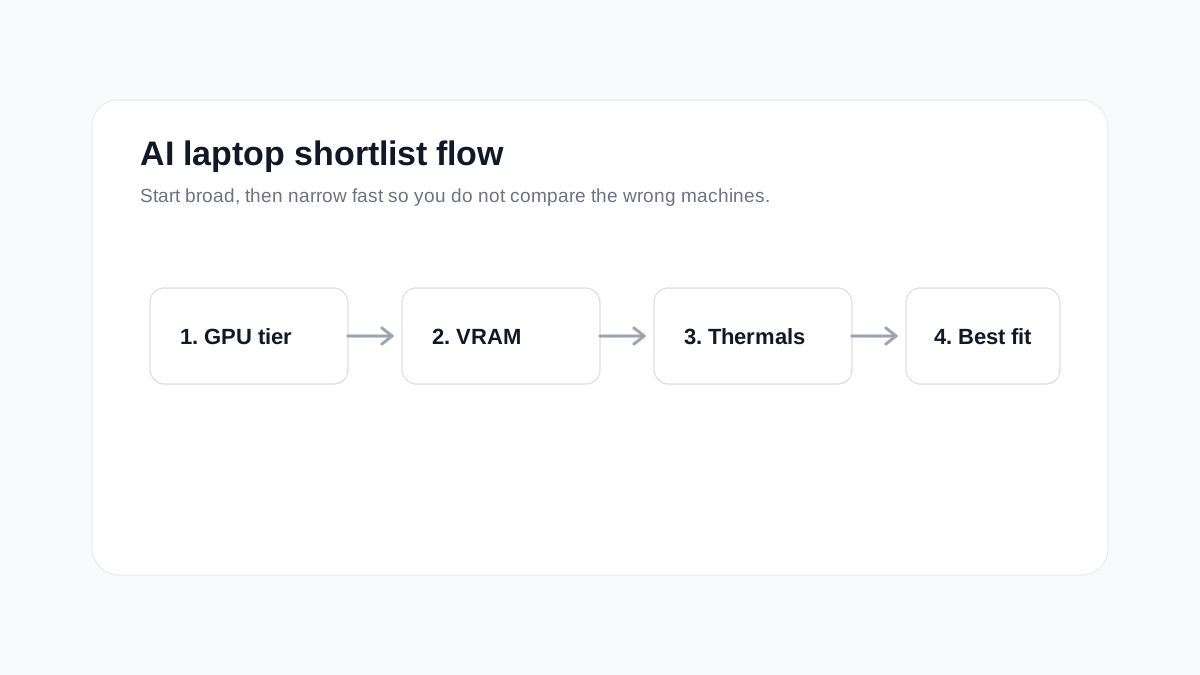
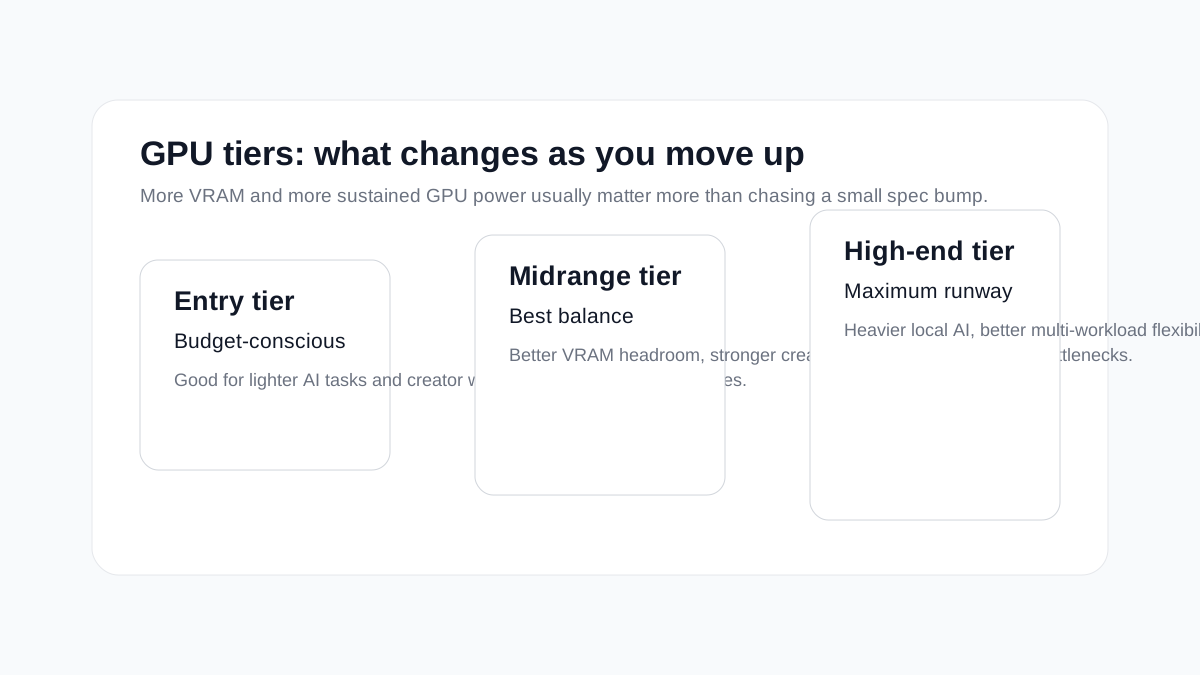
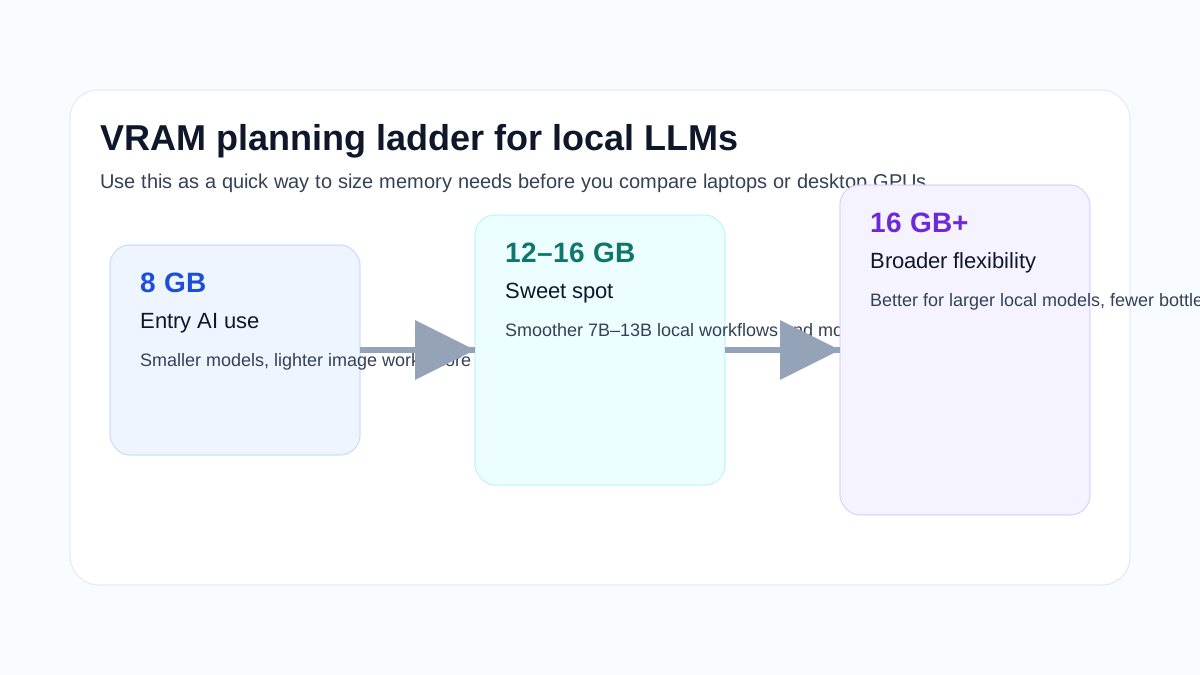
GPU tier and VRAM headroom: enough room for the intended model or creative workload without overspending.
Thermals and sustained wattage: whether performance holds up after the first few minutes.
RAM and storage planning: enough memory and scratch space for real projects, not just booting the software once.
Portability trade-offs: size, weight, and charger burden relative to the performance gained.
Keyboard, display, and I/O quality: ownership details that matter during long development and creator sessions.
How GTG uses supporting pages
Not every query should be answered by the same page. GTG uses hubs, rankings, workload guides, and direct comparisons so each page can stay focused on one job instead of cannibalizing adjacent intent.
How GTG scores AI laptops
For AI laptop coverage, we weigh GPU class, usable VRAM, cooling behavior, wattage ceilings, RAM planning, storage headroom, and whether a machine stays comfortable during longer Stable Diffusion, local LLM, Unreal Engine 5, or creator sessions.
We also separate headline specs from real-world fit. A higher-tier GPU only helps when the chassis, thermals, and power limits let that hardware sustain useful performance instead of just posting a stronger spec sheet.
What we look for on comparison pages
Value tier: where the laptop sits in the real buyer budget ladder, not just the launch MSRP.
Thermal behavior: whether the machine can hold its GPU tier without excessive noise or throttling.
Workflow fit: whether the recommendation makes sense for Stable Diffusion, local LLMs, UE5, Blender, video editing, or general productivity.
Upgrade path: whether memory, storage, and platform limitations will age poorly after six to twelve months.
Recommended methodology routes
Use these pages when you want to see the framework applied to real buying decisions:
GTG updates rankings when the market changes enough to alter buying advice. That includes new GPU tiers, major pricing shifts, improved value in older configurations, or better evidence about how a laptop behaves under sustained AI and creator workloads.
The goal is not to chase every launch-day headline. It is to keep the site useful when a buyer is actually deciding between two machines, two GPU tiers, or two budget bands.
What a strong recommendation must prove
Workload fit: the device has to make sense for the task, not just look impressive on paper.
Thermal honesty: cooling and sustained behavior matter as much as the chip label.
Value context: GTG compares what the buyer gains, not just what the spec sheet adds.
Planning headroom: RAM, storage, VRAM, and upgrade flexibility should still make sense months later.
How our evaluation framework is intended to help readers
Our evaluation framework is built to make recommendations easier to interpret. Instead of assuming every reader wants the same device, we look at workload fit, value, thermals, platform trade-offs, and where a product sits in the broader market. That helps explain why two products with similar specs may still feel very different in daily use.
Whenever possible, the goal is to connect buying advice to real-world categories such as AI workflows, local model use, creator tasks, and practical portability. That makes the recommendations more useful for readers choosing a device for a specific purpose.
Why methodology pages matter
A clear methodology page makes the rest of the site easier to trust because readers can see how recommendations are framed before they encounter ranked lists or buying guides.
How this improves our recommendations
Evaluation is only useful when it changes the buying advice. We use methodology pages to explain why a laptop with stronger cooling, more RAM, or a better-balanced GPU tier may outperform a louder spec sheet in real workflows.
That lets readers move from isolated benchmarks to clearer decisions about AI development, gaming, 3D work, productivity, and everyday portability.
Editorial standard
What this methodology is designed to protect
Buyer clarity
We want readers to make faster, safer decisions instead of guessing from bloated spec lists.
How this scoring system connects to the money pages
GTG now applies this framework directly on core AI money pages so readers can see the same workload-first logic on roundups, requirements pages, and GPU comparisons.
Best AI Laptops: shortlist-first scoring with stronger segmentation.
Local LLMs: RAM, usable VRAM, and model-size fit weighted more heavily.
Workload realism
We prioritize how a machine fits Stable Diffusion, local LLMs, creator work, and actual ownership trade-offs.
Commercial transparency
Retailer links are used to validate a buy after the shortlist is built, not to replace editorial judgment.
Originality and evidence layer
We do not want methodology to live only on this page. The framework should show up directly inside high-value guides as visible tables, workload notes, and comparison criteria. That gives readers a way to inspect why a recommendation exists before they click a retailer.
Visible evidence blocks
Core pages now include editorial notes, methodology links, and practical scoring summaries.
Comparison-first tables
Core AI pages now expose criteria such as VRAM headroom, thermal stability, workflow fit, and value tier in a table format.